OPENER REPAIR AND TROUBLESHOOTING
The opener quit. The door may be innocent.
Before you price a new opener, it is worth knowing one thing about how these machines are built: on a balanced door, the opener does surprisingly little work. It manages the movement. The springs carry the weight. So when an opener starts failing, the cause splits two ways: something inside the unit wore out, or the door got heavier, out of balance, as its springs aged, and the opener has been doing a lifters job on a managers pay. Metcalf Garage Door sorts out which one you have, in Overland Park and across Johnson County. The estimate is free, hassle-free, and no-obligation, and most calls here are seen the same day.
What your opener is trying to tell you
It hums, and the door does not move
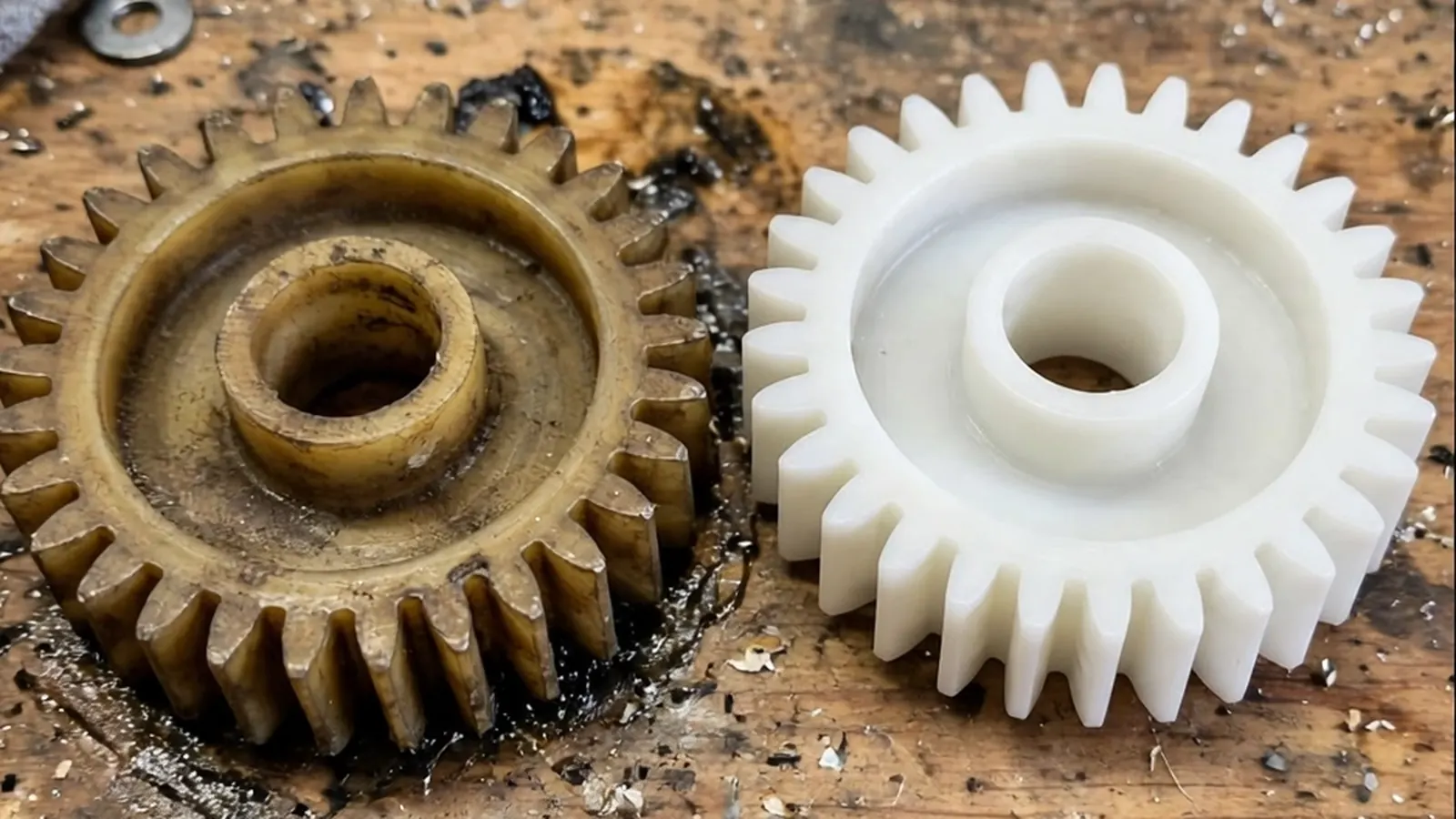
A motor that hums without lifting has power and intent, and something between them has let go: usually the drive gear inside, worn to a cone of plastic dust after years of work, or a capacitor that can no longer start the motor. The hum is good news and bad news: the motor lives, the transmission does not.
It starts down, then changes its mind
Down a foot, a pause, and back up, sometimes with the light flashing its opinion. The opener believes something is in the doorway. Sometimes something is: the photo eyes at the base of the tracks get bumped, filmed with cobwebs, or knocked out of alignment by a trash can. Sometimes nothing is, and the force settings or the door's own binding are fooling it. Either way the machine is reporting, not rebelling.
The light blinks and the door stays put
Count the blinks. Manufacturers built a small diagnostic language into that light, and the pattern separates a sensor complaint from a lock left engaged from a board with opinions of its own. If you call us, or anyone, tell them the pattern. It is the opener's way of filing its own work order.
It stops halfway, up or down
A door that gives up mid-travel is often not an opener problem at all. The unit cuts out when the work gets too heavy, and the work gets heavy when springs weaken, rollers bind, or a track pinches. The opener gets blamed because it is the part with the voice. The door may be the author.
It opens when nobody asked it to
Phantom openings spook people, and they should: a door standing open at 2am is a security event. Causes range from a neighbor's remote on an old frequency to a remote in a drawer with something resting on its button, to a board going strange. Older openers share frequencies with half the street. A modern unit with rolling codes usually ends the mystery.
Nothing. From any control. At all
Total silence from the wall button, the remotes, and the keypad says start at the power: the outlet (garage outlets love to be on a tripped GFCI in another room), the breaker, then the unit. If power is present and the opener is silent, the failure is inside, and it is a diagnosis, not a guessing game.
What opener repair typically runs in Johnson County
Budgeting numbers again, not a quote: your price is set at your door, before work starts, and it is the whole job.
| Opener repair | Typical range | Usual time |
|---|---|---|
| Gear and sprocket replacement | $150 to $300 | About an hour |
| Logic board replacement | $200 to $400 | About an hour |
| Photo-eye sensors, replaced and aligned | $75 to $175 | Under an hour |
| Remote or keypad, replaced and programmed | $75 to $200 | Under an hour |
| Most other opener repairs | $150 to $400 | Varies |
| New opener, installed | $350 to $800 | 2 to 3 hours |
Installed prices for a new unit move with the drive type and the door: a quiet belt drive over a bedroom costs more than a chain drive on a detached garage, and a tall door needs a taller rail. If replacement is the honest answer, you will see the repair price and the replacement price on the same visit, and the decision stays yours.
Repair it, replace it, or look at the door first
Openers fail from the small parts inward. Gears, capacitors, sensors, and remotes are wear items with decades of parts support behind the big brands. Boards are the turning point: a board for a current model is an easy call, and a board for a twenty-year-old unit may still exist, cost real money, and leave the rest of the machine twenty years old. The second turning point is the door itself. Replacing an opener that has been lifting an unbalanced door buys you a new opener on the same diet that killed the old one.
Three questions sort most of these calls, and they are worth asking any company, in this order. Is the door balanced, with the opener disconnected and lifted by hand? Does the part this unit needs still exist, and at what price? And if we repair it, what is the next oldest part in the machine? Paul's install years made him stubborn about the first question. A striking number of dead openers are just the messengers.
Why homeowners bring us their openers
Describe the performance, save the guesswork
An opener puts on a small show before it dies: a hum, a click, a blink pattern, a smell like warm electronics. Noting which show yours performs, and telling Carla on the phone, points the diagnosis before the truck rolls. It is the fastest way to a first-visit answer.
Try every remote before the visit ends
The remote in the truck, the keypad by the door, the button in the kitchen: each one should open and close the door before anyone leaves. Ask for it, from us or anyone. A repair that only works from one control is a story half told.
Ask whether the part still exists
For an older opener, that single question decides the whole job before money moves. Discontinued is discontinued, and hearing it after a teardown helps nobody. It is the first thing we check on a unit with gray hair, and it should be the first thing you ask.
Repair and replacement, side by side
When both roads are real, you should see both prices in the same conversation: what the repair buys you, what the replacement buys you, and how old the rest of the machine is either way. Then the choice is arithmetic instead of salesmanship.
How an opener call goes
- You narrate the show. Call Call for same-day help or send the estimate form: hums, blinks, smells, which controls work. The pattern narrows the parts list fast.
- The door gets checked before the unit. Balance first, then the opener gets opened. A worn gear and a heavy door are different prescriptions.
- You hear the price and the parts answer. Diagnosis, full price, and whether the parts exist, before you decide anything.
- Every control gets tried. Remotes, keypad, wall button, safety reverse, and the failed part named for what it is.
Openers in Johnson County homes
The county's opener population splits by decade like its doors do. The growth-wave subdivisions of Overland Park, Olathe, and Lenexa are full of builder-installed units from the nineties and two-thousands now reaching the end of their parts support. The older northeast cities run openers in unheated detached garages, where cold thickens old lubricant and batteries give up in January. Newer builds near Lenexa City Center and in south Overland Park carry smart openers whose problems are as often Wi-Fi as mechanics. Different decades, different failures, same first question: how heavy has the door become? Town-by-town detail is on the service areas page.
Opener questions
My opener is from the nineties. Can it still be repaired?
Often, yes; the big brands supported their gears and remotes for a long time. The honest limits are boards and safety: parts for some models are gone, and a unit old enough may predate the photo-eye era entirely. Age alone does not retire an opener, but ask for the parts answer before approving a repair, not after.
The chain sags and slaps the rail. Opener, or door?
Usually the opener's department: chains stretch with age and a sagging chain is adjusted or, at the end of its adjustment, replaced. But a chain working a heavier-than-balanced door wears faster, so the sag is worth a balance check while someone is up there. Belt drives do not sag; they fray, quieter about it.
Why does everything struggle in cold weather?
Cold is a systems test. Lubricant thickens, metal contracts a few thousandths in the tracks, springs give a little less help, and backup batteries give a lot less. A door balanced with no margin in October has none to spare in January. If yours only misbehaves in the cold, that is real information about its margin, not a ghost.
Can a new remote be matched to an old opener?
Depends on the era. Openers speak radio in generations: the old fixed codes, then rolling-code systems in a few flavors. A universal remote covers many, not all, and a remote that cannot speak your unit's language will never pair, no matter how fresh its battery. Tell whoever helps you the brand and rough age of the unit before buying remotes at the hardware store.
Is a belt drive worth it under a bedroom?
If the garage sits under or beside a bedroom, usually yes, and it is the question that decides more Johnson County opener replacements than horsepower does. Chain drives carry sound through the ceiling joists; belts mostly do not. On a detached garage, the chain's noise bothers nobody and its price is friendlier. Match the drive to the house, not the brochure.
Opener putting on a show? Call for same-day help or start with the free estimate.